
Toolpad

Tags
Pricing model
Upvote
0
Toolpad is an open-source, low-code platform designed for developing internal tools and dashboards. It features a drag-and-drop interface with pre-made components, enabling developers to swiftly build custom applications that connect with current backend services and APIs. Organizations may opt for Toolpad due to its fast development capabilities, customization flexibility, and cost efficiency, as it allows teams to create and deploy internal tools efficiently with minimal coding, while providing full control via self-hosting options.
Similar neural networks:

Upvote
0
Cyanite is a powerful music search and tagging platform utilizing artificial intelligence to analyze millions of songs and classify them in a short time, enabling users to provide the appropriate music content for any scenario. It features tagging, audio-based similarity search, keyword search, song recommendations, and data visualization to assist users in locating the required music efficiently. Additionally, it includes keyword cleaning to identify errors in manual tagging.

Upvote
0
Effortlessly store, categorize, and utilize your AI prompts. Whether you're a digital artist, copywriter, or an AI enthusiast, ensure your text prompts are well-organized and easy to access for chat gpt, jasper, stable diffusion, and beyond.
Upvote
0
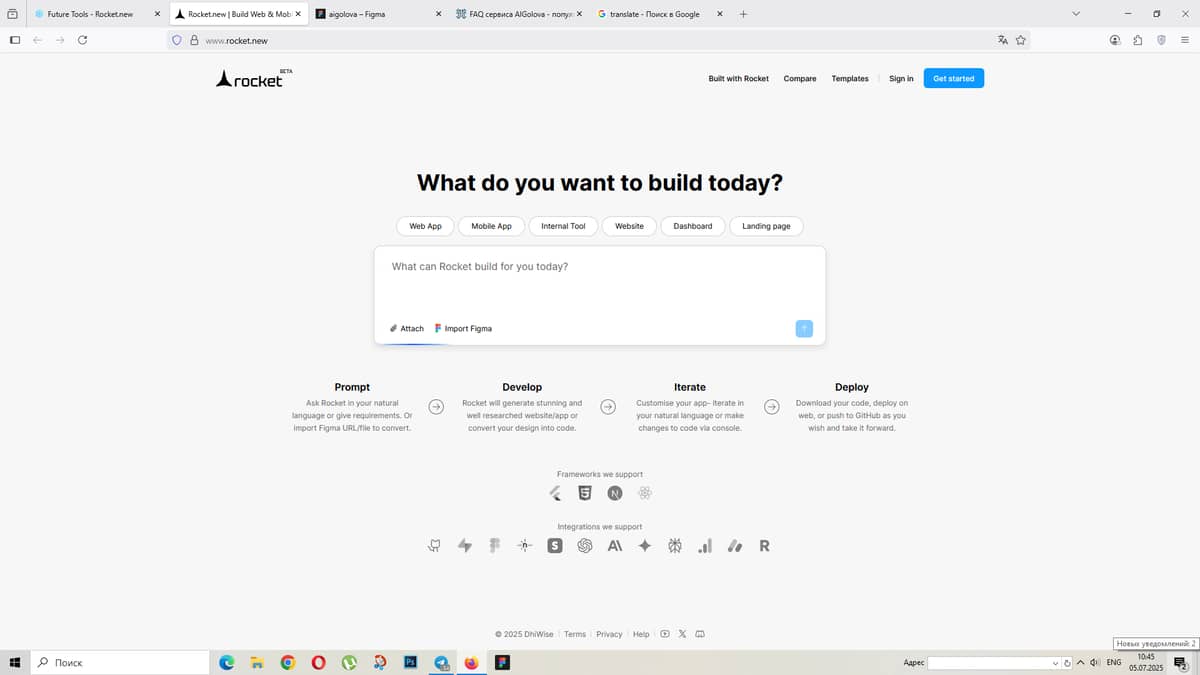
Lazy AI is a platform that allows users to create and customize full-stack applications, such as web apps, AI agents, automations, and chatbots, using simple prompts. The platform offers a one-click solution to test and deploy on scalable cloud infrastructure, making it attractive to both developers and non-developers who wish to simplify the app development process without needing extensive coding skills. Users may choose Lazy AI to quickly prototype and generate software solutions, utilize AI features, automate tasks, or effortlessly integrate various services, thus saving time and lowering the technical hurdles in developing advanced digital tools and services.