

In recent years, there has been a significant advancement in the field of Artificial Intelligence (AI) and Augmented Reality (AR). These technologies have become increasingly popular and have the potential to enhance virtual experiences in various fields such as gaming, education, healthcare, and...
An Algorithm Helps Emergency Doctors Make Faster Diagnoses on Patient Arrival
50
11.10.2026
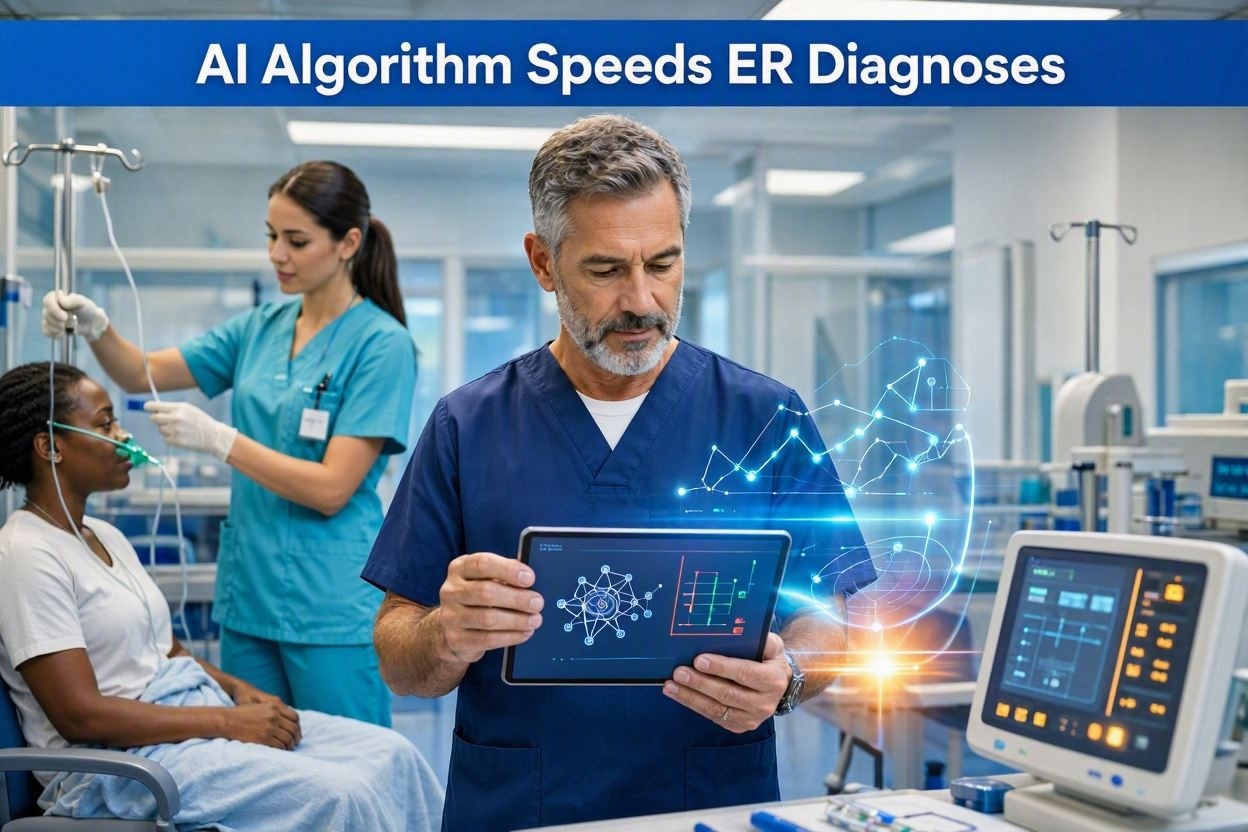
Emergency departments are designed for uncertainty. A patient may arrive with chest pain, confusion, fever, shortness of breath, or vague weakness, and clinicians must quickly decide whether the cause is minor, serious, or immediately life-threatening. A new generation of diagnostic algorithms is helping emergency doctors make those decisions faster by analyzing patient information as soon as the person enters the hospital.
These tools do not replace clinical judgment. Instead, they act as rapid decision-support systems, combining vital signs, symptoms, medical history, triage notes, previous records, and early test results to highlight likely conditions and urgent risks. In a setting where minutes can affect outcomes, that added speed can be valuable.
Why Faster Diagnosis Matters in the Emergency Department
Emergency physicians often work with incomplete information. Many patients cannot clearly describe their symptoms, some have multiple chronic conditions, and others arrive before laboratory or imaging results are available. Delays in identifying sepsis, stroke, heart attack, pulmonary embolism, or internal bleeding can lead to worse outcomes and longer hospital stays.
A diagnostic algorithm can scan patterns more quickly than a human team working manually. For example, it may recognize that a combination of low blood pressure, elevated respiratory rate, abnormal temperature, and recent infection history suggests a high risk of sepsis. It can then alert clinicians earlier, prompting faster evaluation and treatment.
From Triage to Clinical Action
The first minutes after arrival are critical. During triage, nurses collect core data such as heart rate, oxygen saturation, blood pressure, pain score, age, medications, and chief complaint. An algorithm can process this information immediately and compare it with thousands or millions of similar cases.
Rather than producing a single final diagnosis, the system may generate a ranked list of possible concerns, identify red flags, or recommend priority pathways. This can help the care team decide who needs immediate imaging, blood tests, cardiac monitoring, antibiotics, or specialist review.
How the Algorithm Works
Most emergency diagnostic algorithms use machine learning, clinical rules, or a hybrid of both. Machine learning models are trained on large datasets that include patient presentations, diagnoses, treatments, and outcomes. Over time, the model learns which combinations of findings are associated with specific conditions or deterioration risks.
Data Sources Used at Arrival
The strength of these systems depends on the quality and relevance of the data they can access. Common inputs include:
- Current vital signs and triage category
- Chief complaint and symptom descriptions
- Known allergies, medications, and chronic diseases
- Previous emergency visits and hospital admissions
- Early laboratory values and electrocardiogram findings
- Demographic factors that may influence risk
By integrating these inputs, the algorithm can detect subtle patterns that may be easy to miss during a crowded shift. For instance, it may flag an older adult with mild confusion and normal temperature as potentially septic, because older patients often present without classic fever.

Benefits for Doctors, Nurses, and Patients
The primary advantage is speed, but the benefits extend beyond faster alerts. A well-designed algorithm can reduce cognitive overload, especially when the department is busy. It can remind clinicians to consider dangerous but uncommon diagnoses and help standardize early decision-making across shifts.
Improving Prioritization
Emergency care is not first-come, first-served; it is based on urgency. Algorithms can support triage by identifying patients whose outward symptoms appear mild but whose risk profile suggests danger. This may help prevent high-risk patients from waiting too long.
Supporting Consistent Care
Clinical experience varies among teams, hospitals, and time of day. Decision-support tools can provide a consistent safety net by applying the same risk logic to every patient. This is especially useful in smaller hospitals, overnight shifts, or departments with limited specialist availability.
Limitations and Safety Concerns
Despite their promise, diagnostic algorithms must be implemented carefully. A model trained on one hospital population may not perform equally well elsewhere. If training data contains bias, the algorithm may produce less accurate recommendations for certain age groups, ethnic groups, or patients with atypical presentations.
False positives can overwhelm staff with unnecessary alerts, while false negatives may create dangerous reassurance. For that reason, the best systems are transparent, regularly audited, and monitored against real patient outcomes. Doctors must be able to understand why an alert was generated and when to override it.
Human Oversight Remains Essential
No algorithm can replace bedside assessment, physical examination, or the intuition developed through clinical practice. Emergency doctors consider context that may not appear in structured data, such as a patient’s appearance, family concerns, or subtle changes during observation. The algorithm is most useful when it enhances, rather than interrupts, clinical reasoning.
The Future of Emergency Diagnosis
As electronic health records improve and hospitals collect more real-time data, diagnostic algorithms are likely to become more accurate and more integrated into emergency workflows. Future systems may combine triage information with wearable device data, ambulance reports, imaging analysis, and continuous monitoring to provide earlier warnings.
The goal is not to make emergency medicine automatic. The goal is to give clinicians a faster, clearer view of risk when patients first arrive. When designed responsibly, an algorithm can help emergency doctors diagnose urgent conditions sooner, prioritize care more effectively, and give patients a better chance at timely treatment.