

In recent years, there has been a significant advancement in the field of Artificial Intelligence (AI) and Augmented Reality (AR). These technologies have become increasingly popular and have the potential to enhance virtual experiences in various fields such as gaming, education, healthcare, and...
An Algorithm Optimizes Warehouse Capacity and Reduces Logistics Costs
24
15.10.2026
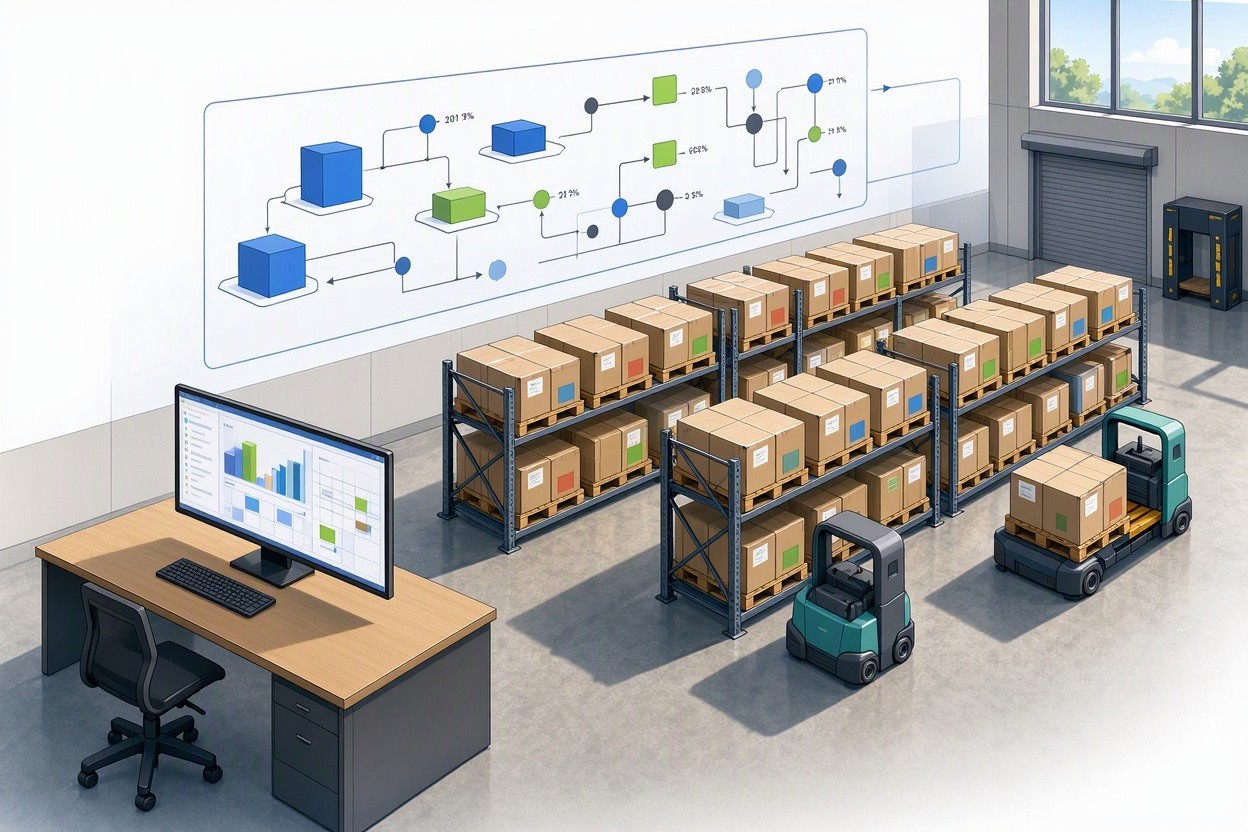
Warehouse space is expensive, and poor capacity planning quickly turns into higher labor, transport, and inventory costs. When products are stored in the wrong zones, workers travel farther, forklifts wait longer, and outbound orders miss shipping windows. A warehouse optimization algorithm solves this problem by using data to decide where inventory should be placed, how much space should be reserved, and when stock should be moved or replenished.
Why Traditional Warehouse Planning Falls Short
Many warehouses still rely on static layouts, manual slotting rules, or seasonal assumptions that become outdated within weeks. Demand changes, suppliers deliver at irregular intervals, and product velocity shifts after promotions or market changes. A layout that worked in January may create congestion in March.
The core issue is that capacity is not only about square meters or pallet positions. It is also about accessibility, order frequency, handling requirements, picking routes, and the cost of every movement. An algorithm can evaluate these variables continuously instead of waiting for a quarterly review.
Common Symptoms of Inefficient Capacity Use
- Fast-moving items stored far from packing or dispatch areas
- Excess reserve stock occupying prime picking locations
- Frequent reshuffling because inbound goods have no assigned space
- Congestion in aisles during peak picking hours
- High labor hours per order despite adequate staffing
How the Algorithm Works
A warehouse capacity optimization algorithm combines operational data with mathematical models. It processes inventory levels, order history, SKU dimensions, storage constraints, replenishment frequency, and route distances. The goal is to allocate space in a way that reduces unnecessary movement while keeping enough flexibility for demand variability.
Data Inputs That Matter
The quality of the recommendations depends on the quality of the data. The most valuable inputs usually include SKU velocity, cube utilization, pallet and carton dimensions, picking frequency, seasonality, batch size, safety stock, and handling limitations such as temperature control or hazardous storage requirements.
Advanced systems also use real-time signals from warehouse management systems, barcode scans, automated storage equipment, and transport planning tools. This allows the algorithm to react when a promotion increases demand, a supplier shipment is delayed, or a zone becomes overloaded.
Optimization Logic
The algorithm typically ranks each SKU by operational impact. High-velocity products are placed closer to picking and packing areas, while slow-moving goods move to less accessible storage. Bulky or heavy items may be assigned to locations that reduce equipment travel or manual handling risk. Products often ordered together can be grouped to shorten picking paths.
Instead of maximizing storage density at any cost, the algorithm balances density with throughput. A warehouse packed to 98 percent capacity may appear efficient, but it often becomes fragile. There is no room for inbound peaks, returns, or emergency replenishment. A better target may be lower physical utilization with significantly faster order flow.
Cost Reductions Across the Logistics Chain
The most immediate savings usually come from labor productivity. When pickers walk shorter routes and forklifts complete fewer unnecessary moves, cost per order decreases. This effect is especially valuable in high-volume e-commerce, retail distribution, spare parts logistics, and third-party logistics operations.
Transport costs can also fall. Better capacity planning reduces last-minute transfers between facilities and improves loading readiness. If outbound orders are staged correctly, trucks spend less time waiting at docks. In multi-warehouse networks, the same algorithm can recommend where inventory should be positioned to reduce average delivery distance.
Key Performance Indicators to Track
- Storage utilization by zone and product category
- Pick distance per order line
- Labor hours per shipped unit
- Dock-to-stock time for inbound goods
- Replenishment frequency and stockout rate
- Cost per order and cost per pallet movement
Implementation Best Practices
Successful implementation begins with a clean data audit. SKU master data must be accurate, especially dimensions, weights, units of measure, and location codes. Without this foundation, even a sophisticated model may produce impractical recommendations.
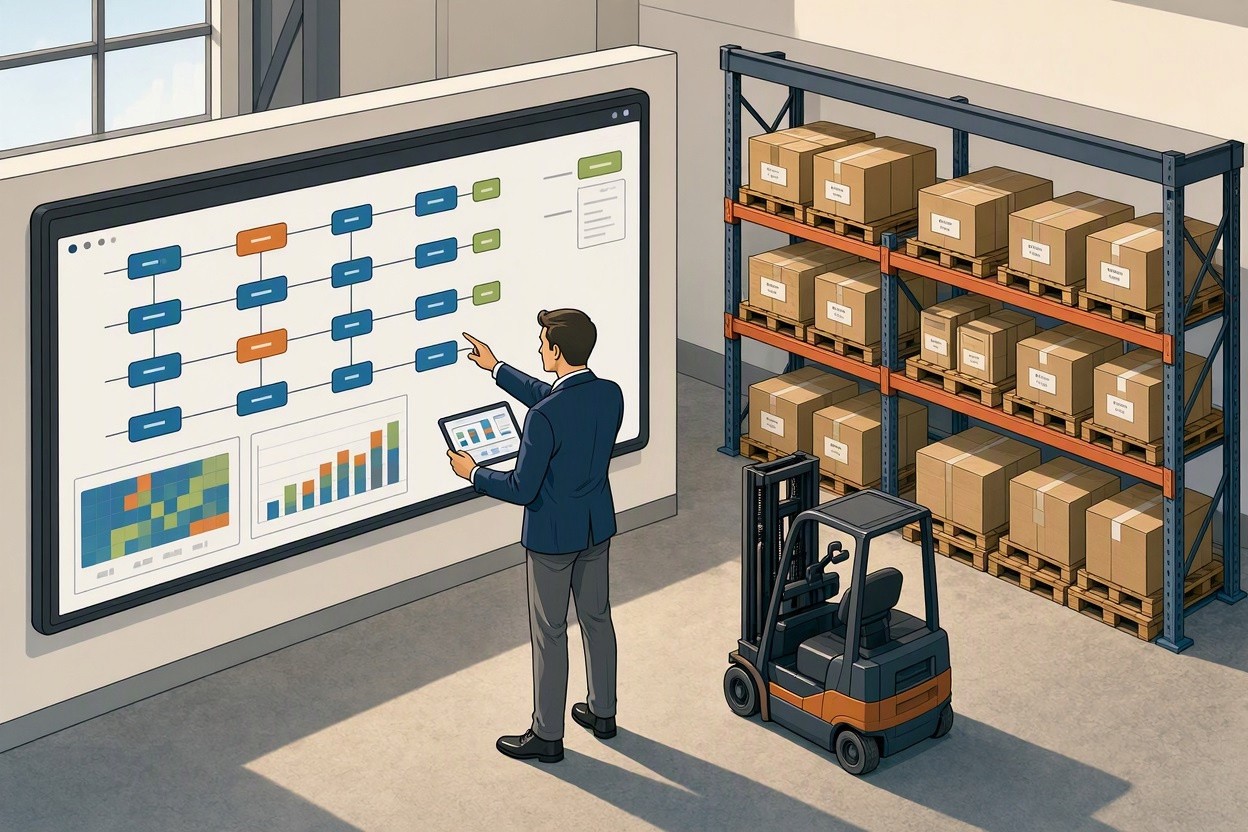
The next step is to run simulations before making physical changes. Managers can compare current layouts with algorithm-generated scenarios and estimate the impact on capacity, travel time, and throughput. This reduces risk and helps operations teams understand the reasoning behind new slotting decisions.
Human Expertise Still Matters
An algorithm should support warehouse managers, not replace them. Experienced supervisors know about damaged racking, informal process constraints, supplier behavior, and labor skill levels. The best results come when operational knowledge is combined with data-driven optimization.
It is also important to review recommendations regularly. New products, discontinued lines, customer demand shifts, and packaging changes can all affect the optimal layout. A monthly or even weekly optimization cycle can keep the warehouse aligned with real conditions.
The Strategic Value of Smarter Capacity
Optimizing warehouse capacity is not just a storage project. It improves service levels, reduces logistics costs, and increases resilience across the supply chain. Companies gain better visibility into where space is consumed, why bottlenecks occur, and which operational changes deliver measurable savings.
As logistics networks become more complex, algorithmic planning offers a practical advantage. It turns warehouse capacity from a fixed constraint into a managed resource. The result is a facility that stores more intelligently, moves goods faster, and supports growth without unnecessary expansion.